KEEP IN MIND
- Choose a landing surface before jumping.
- Check whether holding a jump changes the motion.
- Read attack keys for each game.
- Alter one decision on a repeat attempt.
Start with a visible landing surface
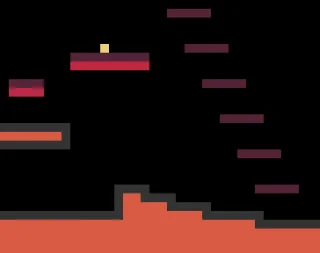
Tiny Platformer uses rectangular platforms, gold and monsters. Its original page documents left/right movement and Space to jump. Pick a broad nearby surface and watch a short jump from departure to landing. Minimal artwork is useful here: the top edge of a rectangle is easier to inspect than a route hidden by scenery.
Read the route when the view rotates
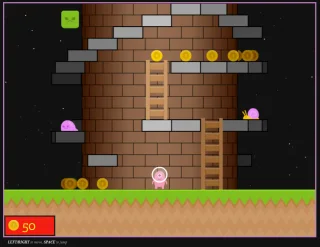
Tower Platformer wraps a route around a cylinder. Walk a small arc and watch how a ledge becomes visible as the tower turns. A platform near the side of the view may be harder to judge than one centered in front of the player. Learn that change before treating a distant coin as the next immediate destination.
Compare a tap with a held jump in Ninja
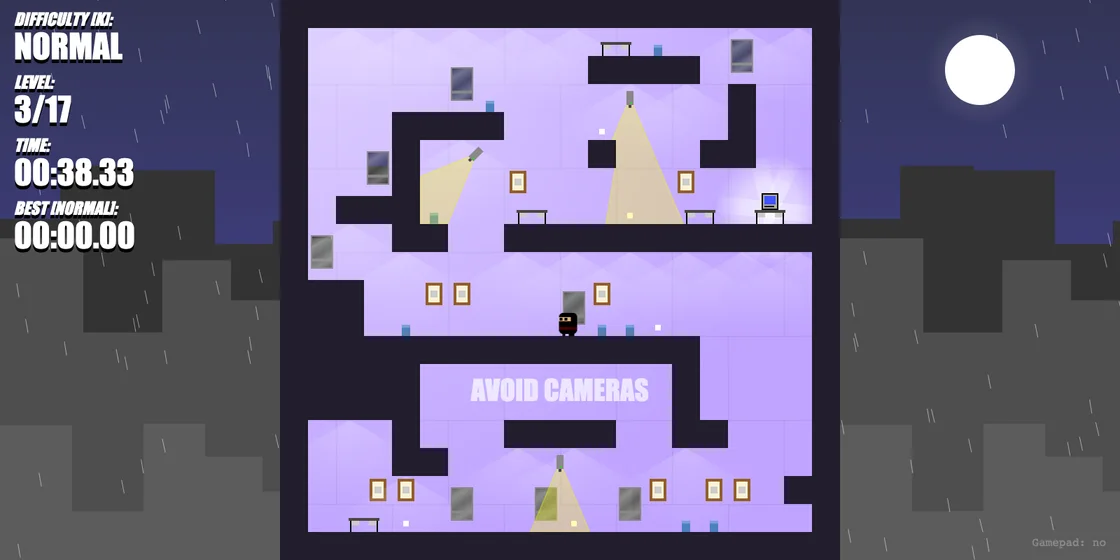
Ninja vs EVILCORP’s source tracks jump hold time and release. Try two short attempts on an easy part of the route: one with a quick press and another with a longer hold. Release before trying the next jump. The creator provides obvious routes and harder alternatives, so choose a route you can describe before making speed the main goal.
Keep attacking distinct from moving
CLAWSTRIKE maps arrows to movement and jumping, Space to a strike and down to a roll, with WASD alternatives in the keyboard mapping. Glitch Buster instead documents holding Space to throw a breakpoint. A familiar Space key can therefore have a different role in the next game. Read its actual opening tutorial and practice one target interaction before combining it with a landing.
Change one decision after a retry
Choose a departure point, a jump duration or an attack timing to change. If all three change at once, a better result is hard to explain. CLAWSTRIKE’s creator emphasizes instant retries, while Ninja includes a timer for comparing routes. These features support practice; they do not require a beginner to copy an unverified speed-run route.
Notice the limits of a prototype
Tower Platformer lists an exit and multiple levels as future features. A playable movement experiment can be worthwhile without a finished campaign. Use the project’s own scope when deciding what to try next, and avoid interpreting an absent ending as proof you have missed a hidden exit.
Read the originals.
Source documents checked . This records a documentation check, not the version deployed by an external game host.