KEEP THIS HANDY
Controls at a glance.
- Click / tap a tile
- Change between the available tile states.
- How to play
- Follow the host’s tutorial for visible counts and blockers.
Count outward from the clue
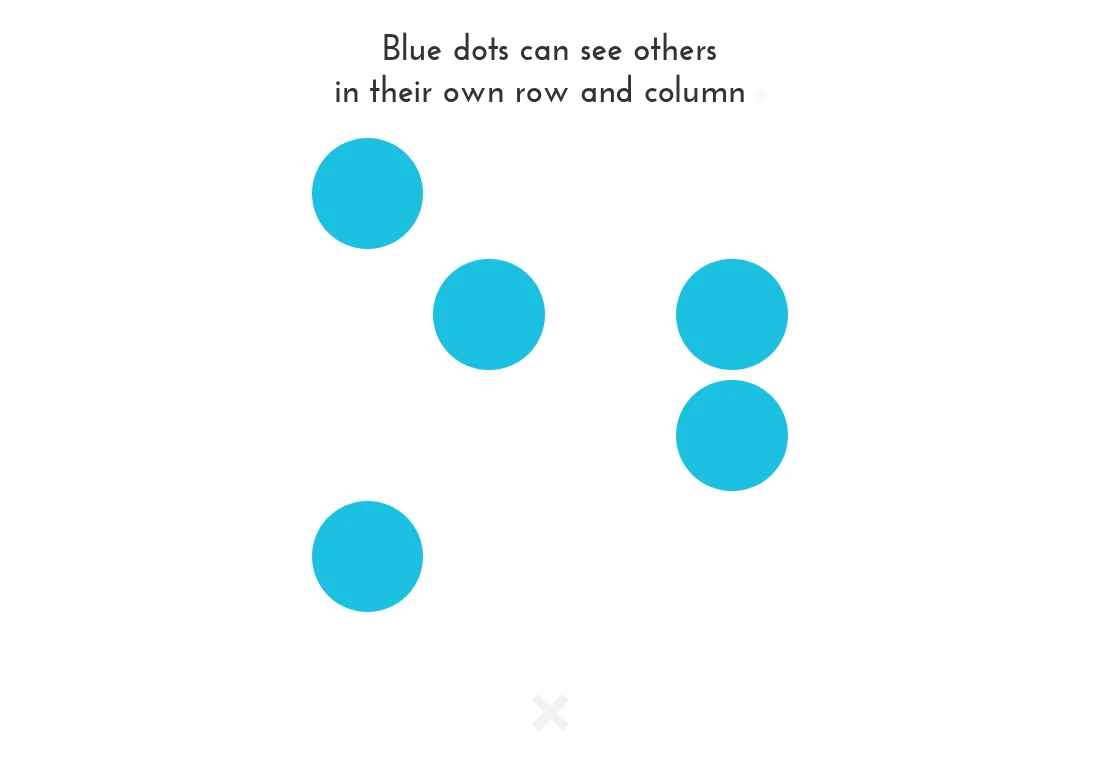
A numbered blue tile describes the other blue tiles it can see along four straight directions. Diagonal neighbors do not contribute. A red tile cuts off everything farther along that direction. Trace each ray separately so that a blue tile behind a blocker does not accidentally enter the total.
Satisfied clues can force a boundary
When the required visible blue count is already reached, any additional connected blue would exceed it. An unresolved next tile along an open ray may therefore need to become red. Recount all directions before placing that blocker; a clue’s total combines the row and column rather than giving a separate allowance to each.
Check unnumbered blue tiles too
The game also requires each blue tile to see at least one other blue tile. A blue tile cut off in all four directions is a problem even when no numbered clue sits there. Near an edge or a cluster of red blockers, look for the one remaining direction that can provide a blue connection.
What happens to your progress?
Check puzzle and resume options on the original host; this guide does not store the board.
Check the save and backup guide ↗A FEW USEFUL ANSWERS
Before the next click.
Do diagonals count?
No. Visibility runs along the row and column.
Can a blue tile stand alone?
The rules require it to see at least one other blue tile.
A useful next read.
0h n0: count the sight lines, then place the blocker. ↗Follow the source.
Martin Kool / Q42; source archive by Techdojo. Licence notice. MIT source archive; original game credits retained.
Latest collected source change: Added proper Windows Phone link (opens a new tab) . Repository activity does not identify the hosted game version.
All media and source credits ↗