KEEP IN MIND
- Read cost, requirement and cooldown separately.
- Give a scouting trip a specific question.
- Plan with the map revealed in your campaign.
- Check supplies before extending the route.
- Include host and version in a useful bug report.
Read the action before spending the resource
The maintainer’s source overview describes named actions with costs, requirements and cooldowns. Inspect that information before choosing an unfamiliar action. A missing resource, a missing requirement and a cooldown are different reasons for an unavailable choice. Start with one action whose result you can follow in the current panels, then compare the changed resources and newly available information before choosing the next step.
Give a scouting trip a small question
A manageable first expedition can answer a particular question about an adjacent area or a potential route. Decide what information would make you return and reassess before walking farther. This is an editorial planning method, not a claim that a fixed number of moves is safe. Equipment, environmental hazards and the sector generated in your actual run determine the relevant constraints.
Use your revealed map instead of the sample illustration
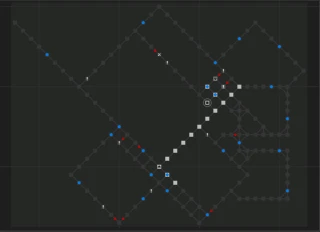
The repository publishes example level structures to explain the world creator. They illustrate generation rather than a guaranteed campaign layout. The game assigns a seed and constructs levels and sectors from it, including resources, hazards and paths. Keep track of what your run has revealed. When using another player’s advice, identify the underlying rule instead of copying a route from an unrelated generated map.
Recheck the return after a new discovery
A newly accessible location can tempt you to extend the expedition. Before doing so, inspect the supplies and route needed to reach your earlier reference point. Treat new equipment, a hazard or an unfamiliar action cost as a reason to reassess. This guide does not guarantee a safe travel budget, automatic rescue or preservation of every resource after a failed expedition; read the running build’s own feedback.
Report the live version when asking for help
The README calls master a development branch that can include unfinished features, while gh-pages holds the more stable live game. Record the actual host and visible version, the action you took and the message that followed. Keep those observations together if reporting a bug. The source’s save architecture is evidence that saving exists, but it does not prove a particular backup has been restored successfully or that a development save imports into every release.
Read the originals.
Source documents checked . This records a documentation check, not the version deployed by an external game host.