KEEP IN MIND
- Begin with a small boundary and one material.
- Use pause to inspect the resulting arrangement.
- Reset clears the canvas.
- Verify a save or share action before closing a creation.
Give the material a boundary
Choose Wall and draw a simple container. Leave enough room above it to introduce another substance later. Select Sand and add a modest amount. Watch where it settles before filling the rest of the canvas. The goal of this opening experiment is to make the movement visible, rather than produce a finished illustration.
Introduce a second material separately
Choose Water and put it in a distinct part of the setup. Observe what reaches the bottom, which spaces remain and how the boundary affects movement. Use the material names shown in the host rather than importing assumptions from another falling-sand game. Similar-looking sandboxes can implement different reactions.
Use pause as an inspection tool
The live palette has pause, Reset and several brush sizes. Pause when you want to compare the arrangement without continued motion. Reset clears the workspace, so treat it as a destructive canvas action and preserve anything you want through the host’s available controls first. A smaller brush makes a narrow opening easier to examine.
Change one part of the setup
Try a different opening in the container, a smaller amount or a different material position. Keeping the rest similar gives you a reference. This method is editorial advice for exploring the simulation; it does not promise a particular physical result. The project describes cellular rules implemented with Rust, WebAssembly and WebGL.
Keep experiments and publication separate
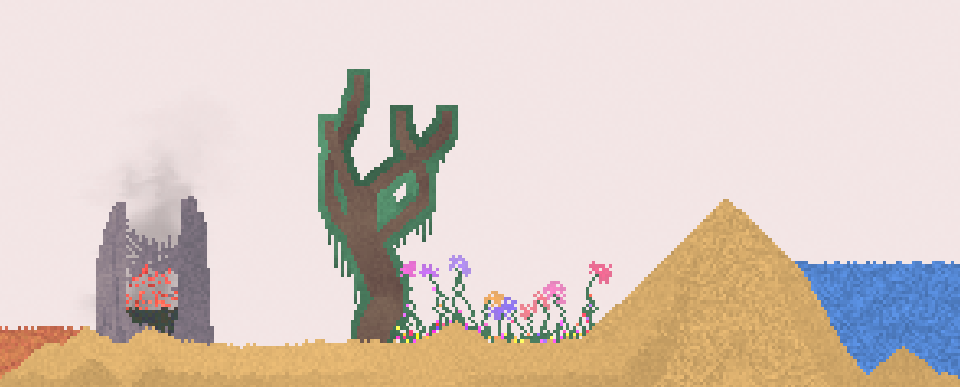
The author describes sharing and forking creations as part of the platform. Creating a scene on the canvas does not establish that it was stored or published. Check the current sharing interface and any account requirements before treating it as a backup. The published landscape shown in this guide is the original repository illustration, credited to the project.