KEEP THIS HANDY
Controls at a glance.
- Pointer / touch gestures
- Select and swap neighboring tiles using the board’s interaction.
- Menu
- Read the active phase and find the slot controls.
- Export / Import
- Copy a slot’s export code or restore a code through the matching menu.
Read what a match produces
The same familiar matching gesture sits inside a broader progression loop. Look beyond the cleared cells: the surrounding interface reports resources, buildings and the current day. Start by observing one swap and its result. Large chains are easier to understand once you know which outcome you are trying to obtain.
Expect the board’s purpose to change
Gridland’s own description links matching, building and survival. Day and night belong to that design. A habit that helps collect a resource may not be the decision you need in a dangerous phase. Watch the active indicators and learn the change as it happens; this guide keeps later discoveries undisclosed.
Keep a slot and a backup distinct
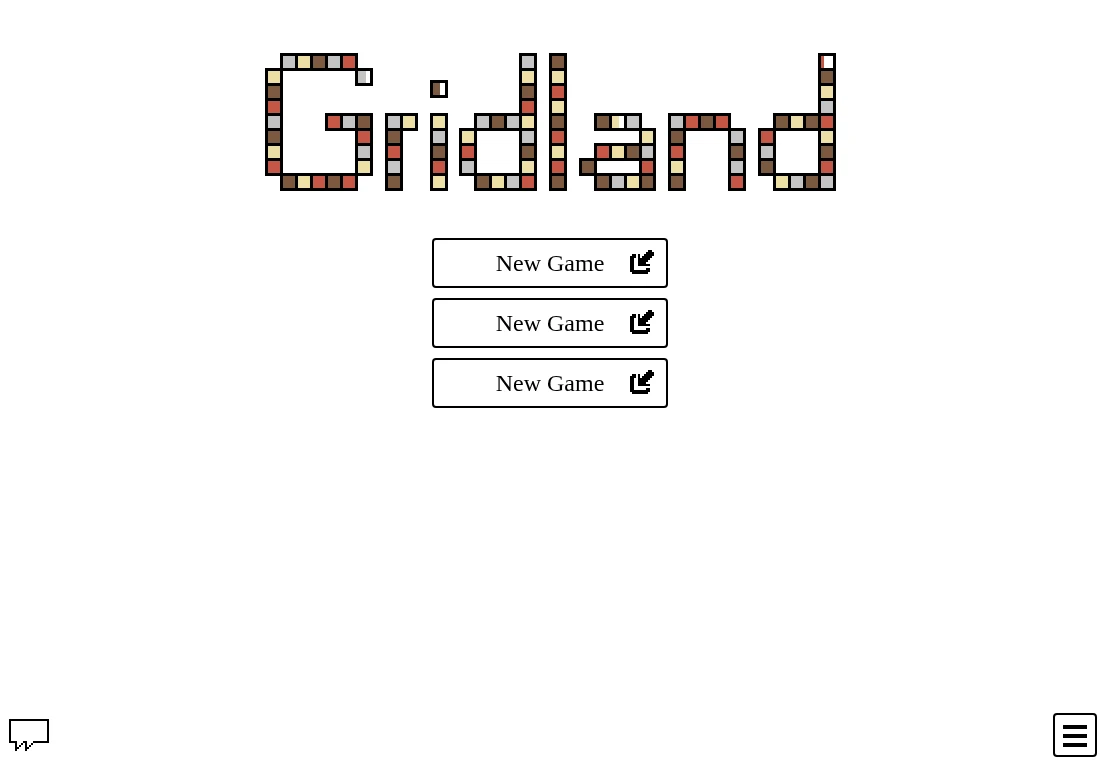
The opening interface offers three slots. The source stores them in local storage and encodes a slot for export. A saved slot on the game’s host is different from this guide’s Saved shortlist. Preserve a readable export separately when you want protection from a browser reset or a move to another device.
What happens to your progress?
The source implements three local slots and export/import codes. Keep an export before clearing browser storage.
Check the save and backup guide ↗A FEW USEFUL ANSWERS
Before the next click.
Is this A Dark Room with pictures?
It is a separate game from the same studio, built around a matching board and its own progression.
Does saving this guide save my campaign?
No. Use Gridland’s own slot and export controls on the original host.
A useful next read.
Gridland: follow the match beyond the tiles. ↗Follow the source.
Michael Townsend / doublespeak games; music by Vince Nitro. Licence notice. MPL-2.0 project; retain individual audio notices.
Latest collected source change: fix badge links (opens a new tab) . Repository activity does not identify the hosted game version.
All media and source credits ↗