KEEP THIS HANDY
Controls at a glance.
- Left / right arrows
- Rotate the planet, as the original opening instructions specify.
- Difficulty buttons
- Choose Easy, Medium or Hard from the opening menu.
- Restart link
- Use the displayed restart control for another attempt.
Rotation changes where an element arrives
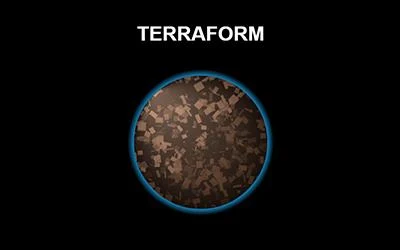
The opening instructions say elements spawn and move toward the planet while left and right arrows rotate it. Inspect the approaching element and the planetary region beneath it. A small turn changes the encounter; waiting without turning is also a choice while the incoming movement continues.
Learn one reaction before chasing a complete world
The source defines water, earth, air and fire and gives their encounters different results, including enhancement, destruction and pushing. Follow an incoming element through its contact with the planet and compare the resulting region. Use that observed reaction to plan the next rotation rather than treating the four colors as interchangeable.
Watch habitability alongside the music
The running interface labels habitability, while the game source uses the elemental composition in its scoring. Music is credited to Jordan Reed and belongs to the presentation. A silent opening and an unresponsive rotation are separate problems to describe when troubleshooting. This guide does not claim a finished planet, an optimal composition or a browser-wide audio test.
What happens to your progress?
A portable campaign export is not established by the reviewed entry. Check the running game before relying on a later resume.
Check the save and backup guide ↗A FEW USEFUL ANSWERS
Before the next click.
How do I rotate the planet?
Use the left and right arrow keys; the pointer chooses menu options.
Can I take unlimited time between placements?
Elements continuously move toward the planet. Rotation is part of responding to their approach.
A useful next read.
Read the feedback before making the next gesture. ↗Follow the source.
Steven Lambert; music by Jordan Reed. Licence notice. MIT project; retain music credit.
- Creator’s competition entry
- Original rotation instructions and difficulty menu
- Element reactions and habitability implementation
Latest collected source change: Update genres (opens a new tab) . Repository activity does not identify the hosted game version.
All media and source credits ↗